
Rose Hill Previous Residents by Era
Previous residents are best traced in layers. Fairfax County tax and deed records identify the parcel and recorded parties. Reverse directories, telephone books, and census schedules can add household-era evidence. The coverage table makes the handoff between sources explicit, which is important because the modern online name index and the older record books do not begin at the same point. Rose Hill did not exist as a postwar suburb in many early sources, so Fairfax County, Alexandria-area, and nearby regional labels may all need to be considered.
| Source | Years It Covers | Where Held | What It Shows |
|---|---|---|---|
| CPAN land index data | 1980-present, book 5391+ | CPAN and courthouse terminals | Searchable grantor, grantee, and instrument references |
| CPAN index book images | 1742-1979, A1-5390 | CPAN and public terminals | Older index pages, subject to legibility and record gaps |
| Land-record images and deed books | 1742-present; originals 1742-1942 | CPAN and Historic Records Center | Recorded instruments, legal descriptions, parties, and references |
| Fairfax land tax books | 1851-1980; microform 1782-1870 | Historic Records Center, Library of Virginia, and Virginia Room | Annual taxable owner, land, value, and tax-status clues |
| Regional criss-cross directories | Selected 1938-1980 runs | Virginia Room and Arlington alternate collection | Address-to-occupant continuity clues, with geographic limits |
| Northern Virginia White Pages | 1962-2018 | Virginia Room | Subscriber name, address, and telephone clues |
| Federal census | Released schedules through 1950 | National Archives, FamilySearch, and library databases | Household composition and residence at the enumeration date |
| Building permits | Online PLUS generally from the 1980s | PLUS, LDIH, and Land Development Services | Construction, alteration, project, and date evidence |
Start with the assessment card and the most recent deed when the question concerns a modern Rose Hill address. Move to older Rose Hill index books, tax books, and local-history shelves as the date recedes. A source can explain ownership, a subscriber, or a household on a census day. It should not be stretched into proof of an uninterrupted residence.
Start a Rose Hill Deed Trail
The strongest route to past recorded owners begins with iCare. Fairfax County's property-history method is specific: search the tax website by street address, open the Sales tab, capture the deed book and page for a recent transaction, then retrieve that deed in CPAN. Read the current grantee, the grantor who sold the parcel, the recording date, instrument type, legal description, and prior-deed reference. Search that seller as an earlier grantee, then repeat while matching the property description each time.
- Find the present parcel in iCare by street address, map number, or map search. Record the situs address, map number, recorded owner, and Sales-tab deed book and page when available.
- Retrieve the most recent recorded instrument in CPAN or at a courthouse terminal. Confirm that its lot, section, subdivision, or legal description matches the parcel.
- Read the seller as a grantor on the current deed, then search that seller as a grantee in an earlier purchase. This usually identifies the prior transfer of the same property.
- Repeat backward, checking every legal-description match. Trusts, estates, corporations, and multiple parties may require searching each exact indexed name and related instruments.
- When the modern searchable index ends, use older CPAN index books, the Land Records Research Room, or Historic Records Center material instead of treating the trail as finished.
- Grantor and grantee
- The grantor transfers an interest in property. The grantee receives that recorded interest.
- Chain of title
- A sequence of recorded transfers used to connect the present parcel to earlier owners or interests.
- Legal description
- The deed's lot, section, subdivision, or metes-and-bounds description. It is more stable than a historical street number.
Open the Fairfax iCare property-search home page to choose Address, Map Number, or Map Search before beginning an address history.
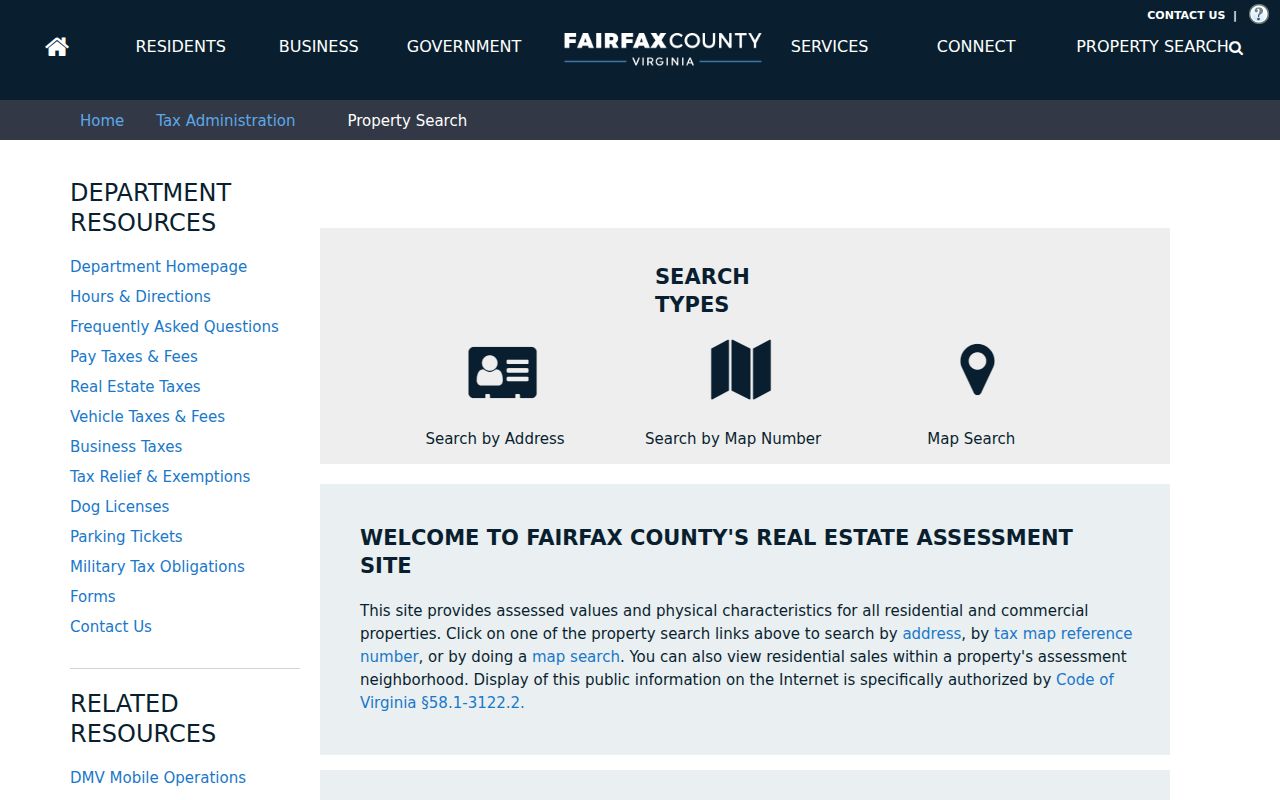
The iCare landing page shows the three county search modes that lead from a Rose Hill address to a parcel and its recorded-sales clues.
Rose Hill Previous Residents on CPAN
Court Public Access Network, or CPAN, is Fairfax Circuit Court's land-record route after a deed reference or party name is known. Its coverage has two important layers. Land-record images extend from 1742 to the present. Modern index data is principally 1980 forward, beginning with book 5391. For older work, CPAN index book images cover 1742 through 1979, A1 through 5390. The Historic Records Center holds original deed books from 1742 through 1942.
That distinction prevents a common mistake in Rose Hill prior-resident research. A search result that stops at the modern index does not mean Fairfax land records began in 1980. It means the work changes from searching modern index data to reading older index pages, images, or original books. The Land Records Research Room has public terminals, and the court's copy-request process can be used after the book and page are identified.
Review the official CPAN access page before choosing an online subscription or courthouse-terminal search path.
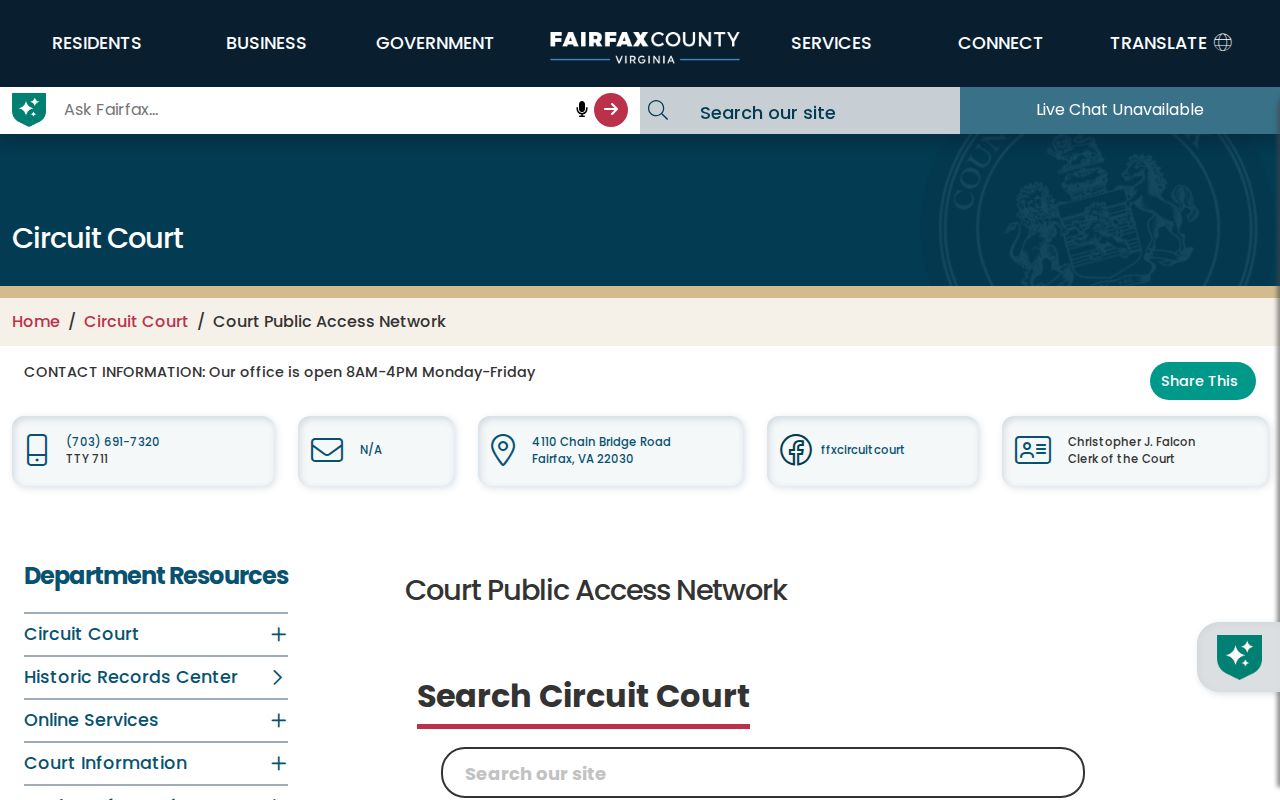
The official CPAN page documents the service that joins a present Rose Hill property reference to the county's older deed and index material.
Fairfax's Missing Deed Books
Some past-resident gaps are real records losses, not a failed search. Fairfax is a Library of Virginia Lost Records Locality. The clerk's office burned in 1875, and surviving material has been moved among courthouse locations. The Historic Records Center reports that 26 of 56 deed-book years from 1763 through 1819 are missing. Loose papers from 1742 through 1865 are incomplete or lost, while chancery records from 1742 through 1805 were lost and the 1805 through 1865 material is largely incomplete after Civil War damage.
Report that Rose Hill gap plainly in a house-history timeline. Do not replace it with an unverified compiled name record. The Historic Records Center's land, probate, court-order, and chancery holdings can still supply related clues, and staff indexed major record groups through 1870 in the 1970s and 1980s. An indirect tax-book, probate, or map reference may help orient the search, but it does not restore a missing deed.
Note: A documented missing book is a valid result and should remain visible in the address timeline.
Rose Hill Address History Divide
Fairfax changed 400 duplicate street names and the street numbers of almost every house in 1965. For previous residents, this is more than a local curiosity. A pre-1965 directory number may not correspond to the modern Rose Hill situs number. The property-history guidance says to bridge the change with cross streets, subdivision information, tax maps, deed references, and the legal description. Keep both old and new address forms in the research notes.
Read directories on each side of 1965 and compare the first post-change criss-cross entry with the parcel description. The stable elements are often the lot, section, subdivision, owner, and cross street, not the number itself. This is especially important for Rose Hill because its modern neighborhood identity began in 1954, after the oldest county sources and before the renumbering.
Rose Hill House History Research
The Virginia Room property-history guide brings the house-history sources into one county-specific method. It points researchers from the Department of Tax Administration to CPAN, then to deed references, land tax books, newspaper indexes, permits, plats, maps, and directories. The Virginia Room also has a CPAN terminal and a microform reader-printer, making it possible to test a deed reference and a telephone or criss-cross entry during the same visit.
The Virginia Room is on the second floor of City of Fairfax Regional Library at 10360 North Street, Fairfax. Its directory collection is especially useful for older households, but it has geographic limits. Alexandria Suburban runs cover 1966, 1968, 1969, and 1971 through 1973. Alexandria City, Fairfax City, Falls Church, and Northern Virginia volumes may provide regional context, not a complete Rose Hill roll. The collection's year and coverage must be stated with each household clue.
Consult the official Fairfax property-history guide for the county's recommended owner-to-deed workflow and its warning about the address change.
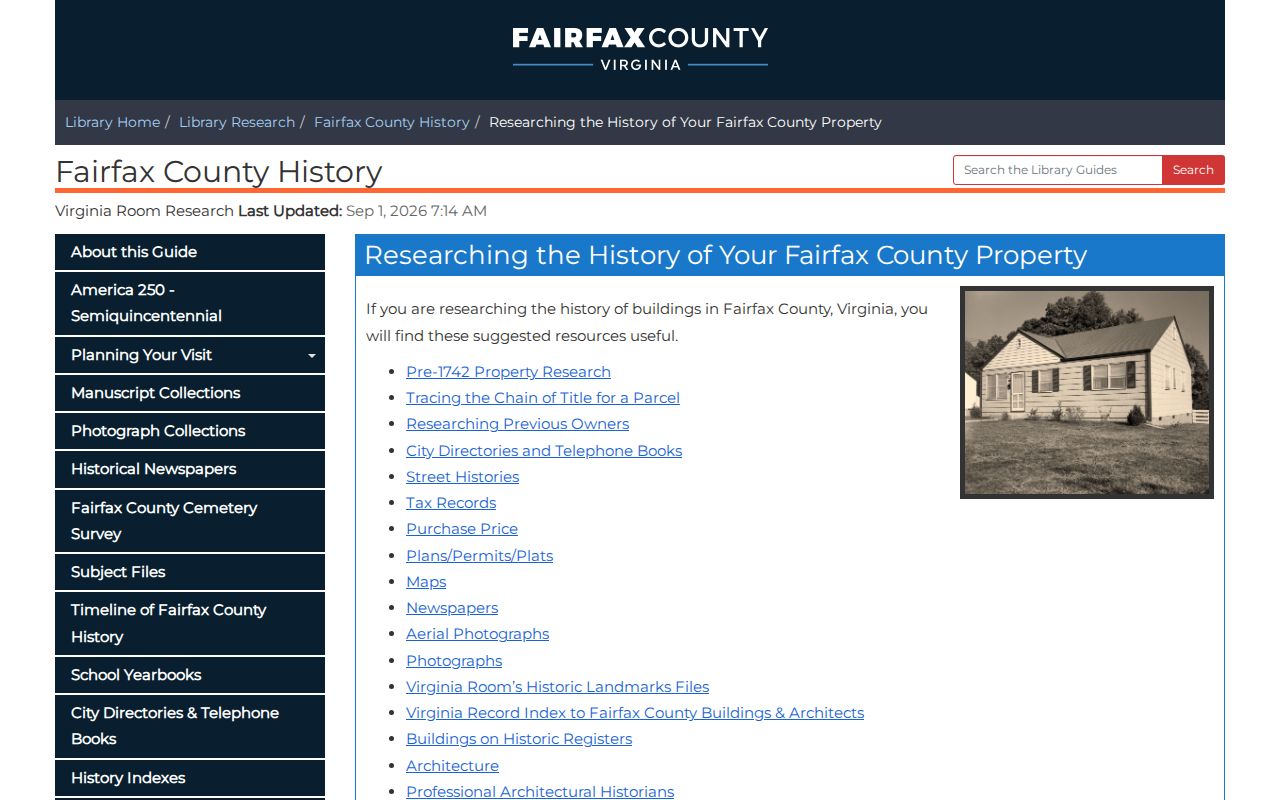
The guide connects assessment records, deeds, maps, permits, tax books, and historical directories without treating any one source as a full occupancy list.
Rose Hill Tax Books and Aerials
Tax books provide another dated layer for past residents and property history. Fairfax land tax books cover 1851 through 1980, with microform runs from 1782 through 1870 available through the Historic Records Center and related library collections. They can show the annual taxable owner, land, value, and tax status. The Virginia Room guide also notes that revenue stamps on early twentieth-century through 1960s deeds can be a possible sale-value clue, though they do not identify residents.
For Rose Hill physical change, Fairfax offers historical aerial imagery back to 1937, annual real-property identification maps from 1960, and historical real-property map alternatives where a Rose Hill Sanborn sheet has not been verified. Fairfax PLUS and LDIH can add construction, alteration, project, and date evidence. These records date a building or change to a parcel. They should not be used to infer a household from a map image or permit alone.
Trace Rose Hill Household Clues
Recorded owners are only one part of a previous-residents search. To learn who may have lived at an address during a particular period, pair the deed trail with a reverse directory, telephone book, census schedule, newspaper index, obituary, or yearbook as appropriate. Use a criss-cross volume to start from the address, then test the named subscriber or occupant in a standard directory and other dated sources. A household clue gains strength when its date, address, spouse or family notation, and parcel fit the same timeline.
- Choose the target year and verify whether the address form predates the 1965 renumbering.
- Check the regional criss-cross or telephone-book run nearest that year, observing its stated geographic scope.
- Search the name in the corresponding standard directory, historical newspaper index, or yearbook when the source supports that era.
- Pair the clue with the released federal census schedule closest to the period, remembering that the currently released schedules extend through 1950.
- Return to the deed and tax sequence to test whether the address, parcel description, and time period remain consistent.
The Rose Hill Directory Book describes the Virginia Room's collections in more detail. When the question shifts from a past household to the current address-keyed record, use the Rose Hill Street Directory instead of treating an old listing as a present record.
Rose Hill Previous Resident Endpoints
An obituary or probate filing can close an address trail after a resident died or a property changed hands. Fairfax Circuit Court's probate, estate, and fiduciary records can identify an executor, beneficiaries, and related property disposition, subject to the record's access rules. A later deed may then show how an estate transferred the parcel. Match names, dates, relationships, and the legal description before connecting those records to a Rose Hill address.
For early material, the Historic Records Center holds wills from 1742 through 1935, along with other older county books. The Virginia Room's newspaper index and its historical collections can supply a lead for a deceased occupant. These sources may document a family relationship or a move, but a name match alone is not enough. Preserve uncertainty where the address, spouse, year, or parcel does not align.